


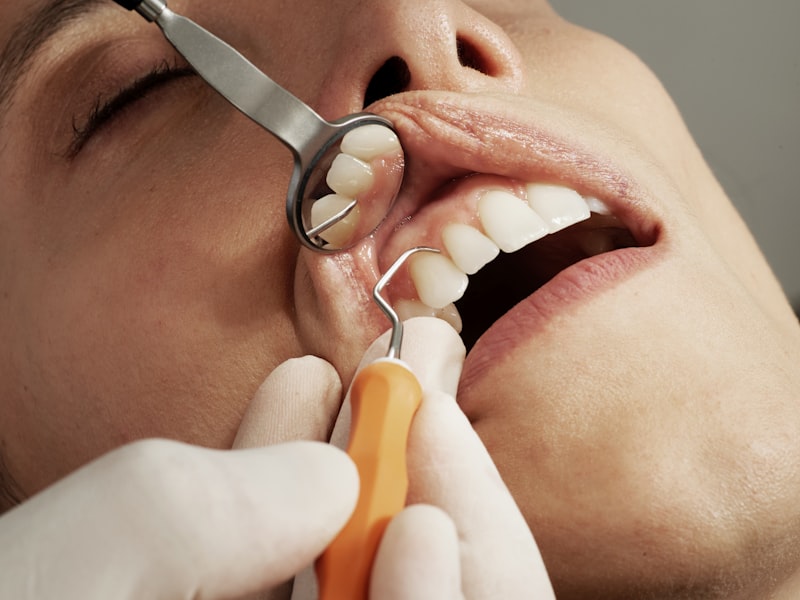
A fissure sealant is a protective coating that closes the deep grooves on molar chewing surfaces. It is usually applied as soon as the six year molars erupt and requires no drilling.
A fissure sealant is a protective coating that fills the deep grooves on the chewing surface of back teeth. No drilling is involved, no anaesthetic is needed, and the whole procedure takes a few minutes. It is most often applied right after the six year molars erupt, between the ages of six and seven.
Why grooves are a problem
The biting surface of a molar is not flat. Between its cusps run narrow channels called fissures. In some children these are shallow and easy to clean; in others they are deep and bottle shaped, narrower than a toothbrush bristle. Plaque settles where the brush cannot reach, which is why so much childhood decay starts precisely there.
How it is done
- The chewing surface is cleaned with a brush and paste
- The tooth is isolated and kept dry, away from saliva
- An etching gel is applied to the enamel and rinsed off
- Flowable sealant material is placed into the grooves
- It is light cured and the bite is checked and adjusted
Which teeth and when
First permanent molars come first. They erupt around age six, behind all the baby teeth and without any tooth falling out, which is why parents often miss them. Second permanent molars arrive around twelve and are treated the same way. Deep grooved primary molars may also be sealed in high risk children.
A sealant is not a filling
Sealants prevent decay; they do not treat it. If decay is already advanced under a groove, sealing it simply hides the problem. The tooth must be examined carefully, sometimes with a radiograph, before the sealant is placed. Where decay is found, it is cleaned and a filling is placed first.
How long do they last
- Sealants can last for years but may wear or chip under chewing forces
- Their integrity is checked at every six month review
- Missing areas are topped up in the same visit
- Sealants do not replace brushing, flossing or fluoride
Applied at the right moment, a sealant is one of the least invasive preventive measures in children's dentistry. If you are unsure whether your child's back molars have erupted, a paediatric dental check will tell you quickly. Our Muratpaşa clinic is open every day of the week.















































































