


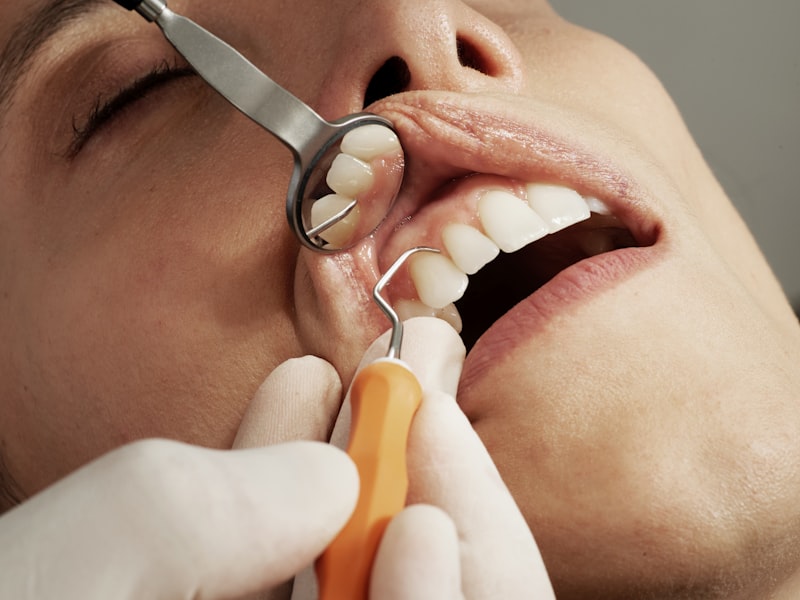
Enamel is the hardest tissue in the body, yet it contains no living cells. Enamel that chips or wears never returns, which is why prevention outranks treatment.
Bone knits when it breaks, skin closes when it is cut, the liver regenerates after part is removed. Tooth enamel is outside that list, and the reason is simple: it contains no cells to carry out repair. That single fact explains the whole of the preventive approach in dentistry.
How enamel forms, and why it never forms again
The cells that produce enamel are called ameloblasts. They work while the tooth develops inside the jaw, complete the enamel layer, and disappear as the tooth erupts. Enamel production therefore happens once in a lifetime, before the tooth comes through.
Once the tooth is in the mouth, enamel is no longer a living tissue but a mineral shell. Having no blood supply, nerve or cells, it cannot respond when damaged. Enamel loss is therefore silent; pain begins only when the dentine beneath is reached.
Not repair, but remineralisation
Enamel is not entirely helpless. When minerals are lost from the surface, calcium and phosphate from saliva can settle back into those gaps. This is remineralisation, and it works far better in the presence of fluoride.
There is a limit, though: it works only while the crystal framework still stands. Once the surface has collapsed into a true cavity there is no way back. Enamel cannot rebuild itself; it can only refill a skeleton that is still intact.
What wears enamel away
There are three main routes to enamel loss, and in most patients more than one is at work at once. Separating them is necessary to choose the right measure.
- Erosion: chemical dissolution by acid — drinks, reflux, vomiting
- Attrition: tooth against tooth — clenching and grinding
- Abrasion: wear from an outside object — hard brush, abrasive paste
- Abfraction: loss at the neck of the tooth under excessive force
Why silent progression is dangerous
Enamel wear advances over years and unnoticed. The patient usually reports that the colour has become yellower, the edges of the front teeth look translucent, or sensitivity to cold has begun. These are already late findings.
Early on the only signs are flattening of the cusps on the back teeth and fillings standing proud of the tooth surface. The second is highly telling: the filling has not risen, the tooth around it has sunk.
What is done once wear has begun
The first step is to stop the loss; since what is gone cannot be brought back, that is the order. The cause is identified: acidic consumption is reviewed, reflux is referred for treatment, and a night guard is made where there is clenching.
Where the loss affects function or appearance, it is covered with composite, veneers or crowns. That is not repair but the addition of an artificial shell; if the cause remains, the new work wears at the same rate.
Do toothpastes bring enamel back?
Advertisements often use the phrase "repairs enamel". What that actually means is contributing to refilling mineral lost from the surface — supporting remineralisation. It does not mean restoring lost thickness.
Fluoride provides that contribution most reliably. Products containing hydroxyapatite are under study with promising findings, but the level of evidence has not yet reached that of fluoride.
Why protecting enamel matters more in children
The enamel of newly erupted teeth is not yet fully matured and is more vulnerable to acid. Maturation completes over the two to three years after eruption, through contact with saliva. That window sets the resistance the tooth will have for life.
The six-year molar holds a special place for this reason: the deep fissures on its biting surface are at greatest risk in the period just after eruption. A fissure sealant is placed precisely to protect that window.
What this means in practice
Because enamel does not return, there is no "slightly worn, we will look at it later" in dentistry. Wear noticed early can be stopped by changing habits; wear noticed late can only be covered with a restoration, and from then on the tooth needs maintenance for life.
This is why six-monthly check-ups are worthwhile even with no complaint. The real job of an examination when nothing is visibly wrong is to catch the stage that can still be reversed.















































































