


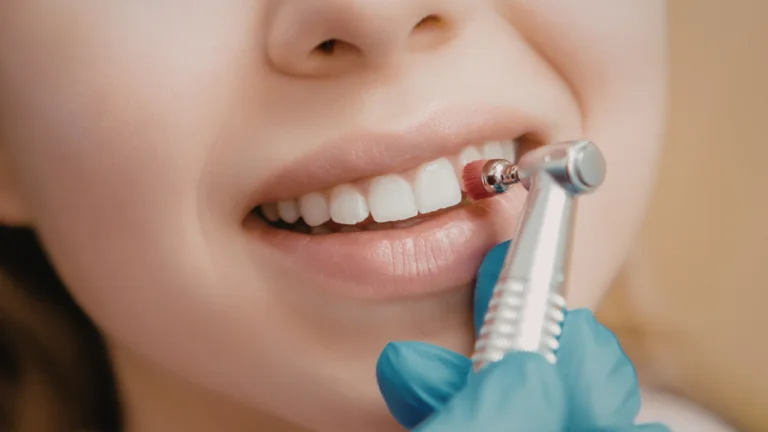
Is the yellowing on the surface or inside the tooth? That distinction decides the treatment. Here is how the two are told apart.
Yellowing comes from two different places. External discolouration is pigment from food, drink and tobacco building up on the surface, and it usually responds to professional cleaning and good daily care. Internal discolouration comes from the tooth structure itself, mostly the dentine beneath the enamel, and surface cleaning will not change it. Telling the two apart decides the treatment.
How external staining develops
Enamel is microscopically rough and carries a thin salivary film that pigments cling to. Coffee, black tea, red wine, cola, dark berries and spiced sauces are the usual sources, and tobacco produces a particularly stubborn layer.
Where brushing falls short, plaque hardens into calculus and the stain concentrates on it. That deposit will not brush off and needs clinical cleaning. Since calculus is also the main driver of gum problems, colour and gum treatment are often addressed at the same appointment.
Main causes of internal discolouration
- Ageing, as enamel thins and the darker dentine shows through
- A single tooth darkening after root canal treatment
- Bleeding inside the tooth after trauma
- Certain medications taken while the teeth were forming
- Fluorosis, giving white or brown patches
- Enamel developmental defects with sharply outlined mottling
How they are distinguished
External staining tends to be spread fairly evenly, heavier near the gum line and between teeth, and it lightens noticeably after cleaning. Internal discolouration stays put afterwards, and when it affects one tooth or follows a distinct pattern it is almost certainly internal. Examination under good light, and imaging where needed, settles the question.
Matching treatment to cause
External staining starts with professional cleaning and a solid daily routine, with whitening added if that is not enough. Internal discolouration depends on the cause: age related darkening often responds well to whitening, a darkened root treated tooth needs a different technique and its own assessment for root canal treatment, and developmental spots may need restorations that cover the surface.
Rinsing with water after dark drinks, brushing twice daily with a proper technique and keeping up interdental cleaning all slow staining down. Brushing harder does the opposite, because roughened enamel picks up pigment faster. Our clinic in Muratpasa, Antalya is open around the clock, seven days a week.















































































