


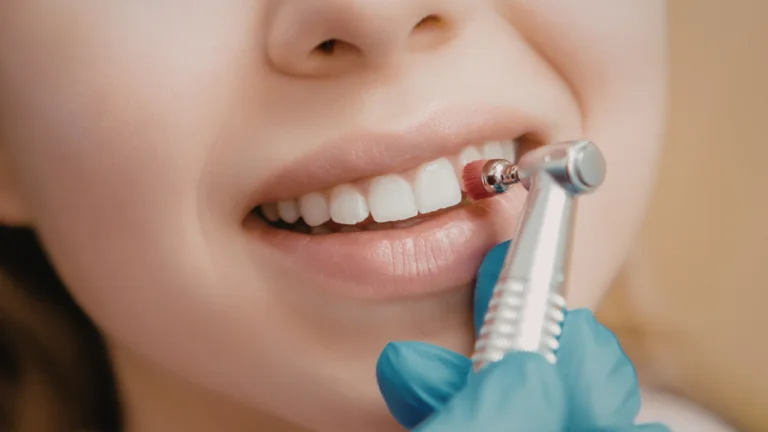
A first appointment is more than a look at your teeth. From medical history to X-rays and the treatment plan, here is what actually happens.
At a first appointment your medical history is taken before anyone looks at your teeth. The mouth is then examined systematically, X-rays are taken where needed, and the findings are turned into a plan. It usually takes thirty to forty-five minutes, and knowing what each step is for makes the visit far easier.
Step one: medical history
- Blood thinners change how extractions and surgery are planned
- Diabetes affects gum treatment and healing
- Heart valve disease or joint replacement may call for extra precautions
- Bone medication of the bisphosphonate type influences surgical decisions
- Pregnancy affects choices about X-rays and medication
Photographs of your medication boxes on your phone are the easiest way to answer these questions accurately.
Step two: the examination
The examination starts outside the mouth, with jaw joint movement, chewing muscles and the lymph nodes of the neck. Inside, the cheeks, tongue, floor of the mouth, palate and lips are checked, not only for decay but to notice changes in soft tissue early. The teeth are then reviewed one by one for decay, cracks, wear, the margins of old fillings and the way the teeth meet. Signs of grinding show as flattened edges and a line along the inside of the cheek.
Step three: gum measurements
A fine probe measures the depth of the space between tooth and gum. It is painless and highly informative: bleeding points, deeper pockets and recession are all recorded. Gum health is the foundation of every restoration that follows.
Step four: X-rays
Decay between the teeth, inflammation at the root tip, unerupted teeth and bone level cannot be judged by eye. A panoramic film or smaller regional films are usually taken. If you have had an X-ray in the last six months, bring it; a repeat may not be needed.
Step five: photographs and records
Where an aesthetic plan is involved, intraoral photographs and a digital scan help with planning and give a reference for comparison later. Our page on smile design explains how these records are used.
Step six: the plan
- Which treatment is urgent and which can wait
- How many appointments are needed and how far apart
- The differences between any alternative options
- How the result should be maintained
- When the review appointment will be
Asking for a written summary is entirely reasonable and makes the plan easier to follow. Simple treatment such as scaling can often be done at the same visit; see our page on gum treatment. Our clinic is in Muratpasa and open 24 hours a day, seven days a week, so first appointments can be booked in the evening or at the weekend.















































































