


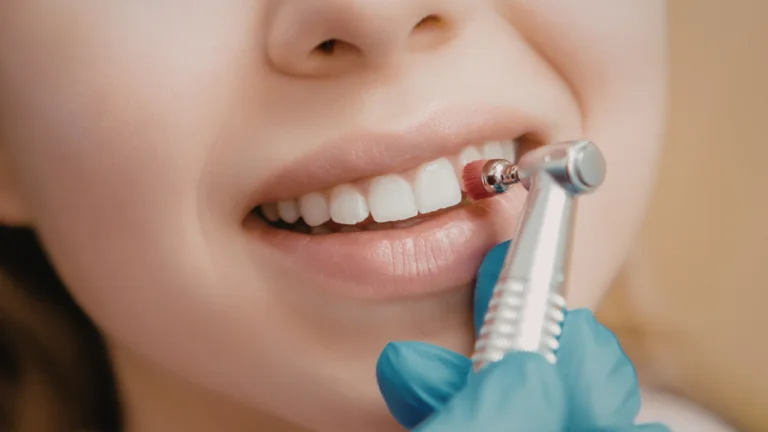
An electric brush leaves less plaque for most people, but the real difference comes from time and technique rather than the device. Here is who genuinely benefits.
One of the questions we hear most often is: "Would an electric brush be better?" For most people the answer is yes, but not for the reason they assume. An electric brush is not a magic device; it simply makes a few genuinely difficult things easier for you.
How big is the difference really?
Comparative studies show electric brushes remove more plaque on average and reduce gum inflammation more. The difference is not dramatic but it is consistent, and it is clearest with oscillating-rotating heads.
The point usually missed is this: what lifts the average is the improvement among poor brushers. For someone already brushing for two minutes with correct technique, an electric brush adds very little.
What an electric brush makes easier
The real contribution of an electric brush is not producing the movement but taking over three things the user struggles with: keeping to time, maintaining a steady speed and preventing excessive pressure.
- A two-minute timer — most people finish in 45 seconds with a manual brush
- Quadrant prompts, so each of the four areas gets equal time
- A pressure sensor that warns heavy brushers or slows the head
- Consistent motion, which levels the result for users with limited dexterity
Who it genuinely helps
For some groups an electric brush stops being a matter of preference. In orthodontic patients, the area around the brackets is the hardest to clean by hand. For people with implants, bridges or several crowns, cleaning quality directly determines how long the restoration lasts.
The gap is widest where dexterity is limited — rheumatic disease, recovery after a stroke, older age. Likewise, in a patient diagnosed with gum disease, an electric brush is the most practical way to protect what treatment has achieved.
Sonic or oscillating-rotating?
The two main technologies work differently. In oscillating-rotating brushes a small round head turns back and forth, and you move tooth by tooth. In sonic brushes a longer head vibrates at high frequency and is swept much like a manual brush.
Declaring a clear winner between them would be wrong; the brush that gets used regularly beats the superior one that does not. Whichever suits your habit is the right choice.
The commonest mistake in use
Using an electric brush like a manual one removes its advantage entirely. The brush produces the movement; your job is to place it correctly and wait. Scrubbing back and forth is both unnecessary and hard on the enamel and gum.
The second common mistake is pressing. Pressing harder does not clean more; it slows the head and paves the way for gum recession. If the sensor warns you, take it seriously.
When to change the head
Because electric heads are small, splayed bristles are noticed later. The rule is to change every three months, and sooner if the bristles have flared. A worn head does not clean; it only makes noise.
After an illness — particularly a throat infection — replacing the head is sensible. Rinse it after every use and store it upright in the open air rather than in a closed case.
Can children use an electric brush?
They can, but the head must suit the child's age and the vibration should be gentle. At a young age the biggest contribution of an electric brush is willingness rather than cleaning power: a timer and a tune stop two minutes from being a struggle and make the habit easier to build.
Even so, a child under six cannot clean adequately alone whatever brush is used. A parent needs to finish the job, particularly on the back molars; the newly erupted six-year molar is the tooth most at risk in this period.
The habit decides, not the brush
An electric brush does not make floss or interdental brushes unnecessary. No brush reaches the surfaces where teeth face each other, and a large share of decay begins exactly there. Buying the device is no reason to skip that step.
In short: an electric brush is a good investment for most people, but on its own it solves nothing. Seeing at an examination which areas you consistently miss makes more difference than which brush you bought.















































































