


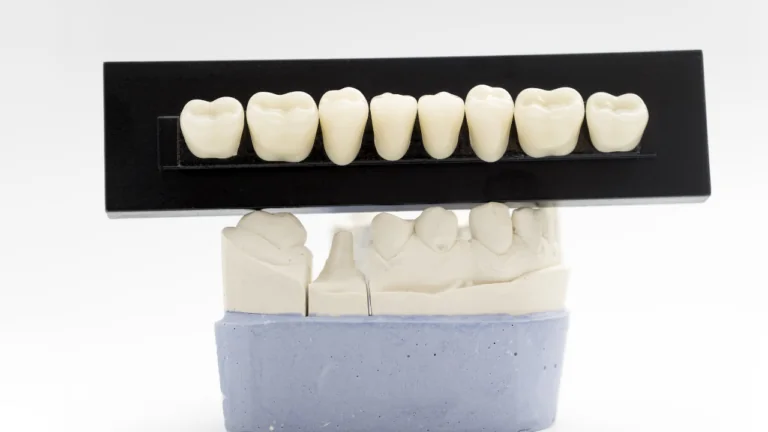
Scanning, on screen design and an in clinic milling unit can finish a crown in one visit. Here are the steps and the limits.
A same day crown is possible when the impression is digital, the restoration is designed on screen and a milling unit inside the clinic cuts it from a ceramic block. The conventional route sends an impression to a laboratory and adds a second appointment. With CAD/CAM those steps happen in one visit, though not every tooth is suitable.
The steps
- The tooth is prepared and the margin exposed if needed
- The prepared tooth, its neighbours and the opposing jaw are scanned
- The crown is designed on screen, including contacts and bite
- The design is milled from a ceramic block
- Staining and firing give the final shade
- The crown is tried in, checked and bonded
What it saves
No temporary crown means no loose temporary, no sensitivity between visits and no irritated gum margin. For anyone travelling or unable to take repeated time off work, a single appointment is a practical advantage, and the prepared tooth is not left exposed for days.
Where a laboratory still wins
Long span bridges, extensive implant work and highly demanding front teeth often benefit from layered ceramic built by hand, where shade transitions can be tuned more finely. For very thin restorations such as laminate veneers, the choice depends on the underlying shade and the translucency you want.
Materials and checks
Milling blocks are industrially produced, so their internal structure is uniform. Block choice follows the site: strength at the back, light transmission at the front. When a zirconia crown is chosen, the framework is milled too, but sintering can add time. Whatever the route, margin fit, contact tightness and bite are checked carefully before bonding, because an unadjusted high spot leads to sensitivity within days.
How long does one visit actually take?
Same day does not mean a few minutes. Preparation, scanning, design, milling, firing and bonding together usually fill several hours, and the milling time itself depends on the size of the restoration. Plan the day loosely rather than squeezing the appointment between other commitments. You can leave the clinic while the restoration is produced, but you need to be back on time for the fitting.
Before you book
- Gum inflammation should be treated first, since bleeding tissue complicates scanning and bonding
- Any tooth needing root canal treatment is dealt with before the crown
- Tell your dentist if you clench or grind, as it changes the material choice
- For demanding front teeth, a laboratory made restoration is still worth discussing
- Some cold sensitivity in the first few days after bonding is common















































































