


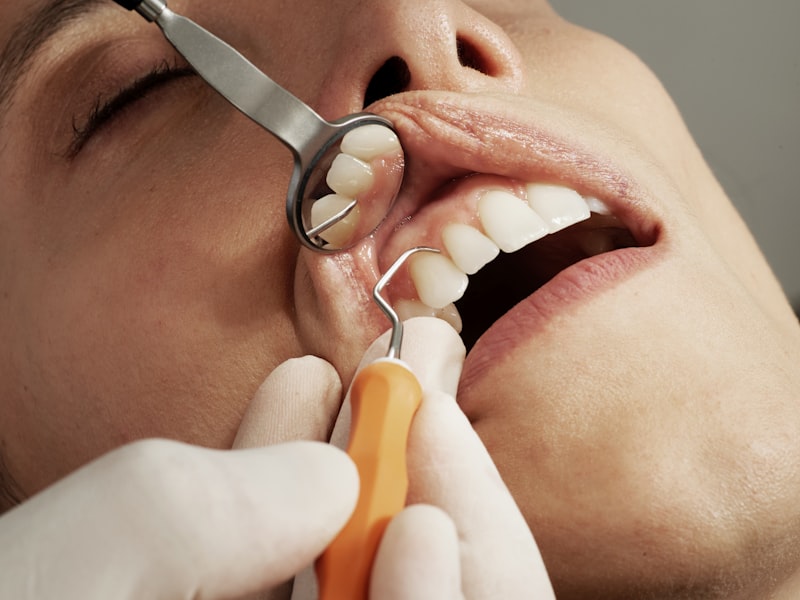
Decay does not begin as a hole; it first appears as a dull white mark. At that stage no filling is needed and the process can be reversed — but the window is narrow.
Most people picture decay as a hole and assume that without a hole there is no problem. Decay, though, is a process rather than an event, and the hole is its final stage. The beginning is visible — and at that stage it can be stopped.
How the process works
The bacterial layer on the tooth produces acid as it breaks down sugar. That acid draws calcium and phosphate out of the enamel. When saliva neutralises the environment the minerals are carried back. Through the day these two directions alternate dozens of times.
Decay appears where loss consistently outpaces gain. A single sugary snack does not cause it; a habit that permanently tips the balance towards loss does.
What a white spot lesion is
Once mineral loss beneath the surface reaches a certain level, the way enamel transmits light changes. When the tooth is dried, that area looks duller and chalky white compared with its surroundings. This is the first visible form of decay.
The important point is that the surface is still intact; there is no collapse. The loss is internal and the layer above retains its integrity. Nothing needs to be added — no filling is required.
Where it is seen
White spot lesions do not appear at random. They form where plaque accumulates most easily and cleaning is hardest. Knowing these areas tells you what to look for in the mirror at home.
- Along the gum margin, especially on the outer surface of the upper front teeth
- Around brackets — very common in orthodontic patients
- At the fissure entrances on the biting surface of the back molars
- On newly erupted teeth, while the enamel is still immature
Can it genuinely be reversed?
Yes, but conditionally. As long as the surface remains intact, lost mineral can be put back. Two things are needed: regular removal of plaque from the area and continuous contact with fluoride.
A healed lesion may not look as it did before; it usually remains as a brighter, harder mark. That mark is inactive and needs no treatment. What matters is the hardness and shine of the surface, not the colour.
Active or arrested: how to tell
An active lesion is dull, rough and chalky; it is usually seen with plaque accumulation and the patient may describe sensitivity there. An arrested lesion is shiny, smooth and hard.
This distinction is made by drying and inspecting under light, and with special light-based devices where needed — not by pressing with a probe. Pressing a probe into an early lesion can collapse the intact surface and turn a reversible situation into one needing a filling.
What is done at this stage
Treatment here means changing conditions rather than adding material. Fluoride varnish is applied in the surgery; at home the fluoride concentration is raised and cleaning of the specific area is taught. In the diet, frequency rather than amount is addressed.
The lesion is photographed and compared three to six months later. That follow-up shows whether the approach is working; if it has advanced, the approach changes. A white spot left unmonitored is a lesion quietly turning into a cavity.
The special case of orthodontic patients
The area around a bracket is where white spot lesions form most often and fastest. They can appear within the first months of treatment and leave a permanent mark on the tooth once the appliance is removed.
Interdental brushes, a fluoride rinse and regular professional cleaning are therefore not negotiable during orthodontic treatment. A treatment begun for appearance ending in damage to appearance is a preventable outcome.
When a filling becomes necessary
Once the surface collapses — the enamel layer breaks and the space beneath is exposed — reversal is no longer possible. Bacteria have settled in an area that cannot be reached; no brush, fluoride or rinse gets there.
From that point the only route is to clean out the infected tissue and fill the space. A filling is a good solution, but the tooth's natural structure has been lost once and that restoration needs monitoring for life. This is exactly why catching the white spot stage is worth so much.















































































