


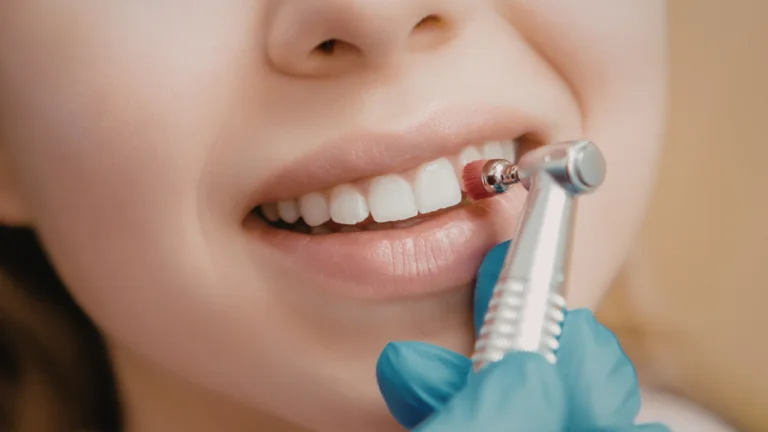
Many people believe a dental cleaning thins the enamel. Here is what the procedure actually does, and why teeth can feel different afterwards.
No. A professional cleaning does not wear away enamel. The ultrasonic tip does not scrape the tooth; it vibrates thousands of times per second and breaks the bond holding calculus to the surface. Enamel is the hardest tissue in the body and is not damaged by that vibration. Understanding where the myth comes from explains what people actually feel afterwards.
Why teeth feel different afterwards
Calculus builds up like a shell. It pushes the gum down, covers part of the root and fills the spaces between teeth. Once that shell is removed, the real situation underneath becomes visible: gaps you never noticed appear, exposed root surface meets cold air, and the teeth feel thinner to the tongue. The wear was caused by the deposits, not by removing them.
What is normal after a cleaning
- Sensitivity to cold for a few days
- Tender gums, and spot bleeding where inflammation was heaviest
- Teeth feeling smoother and slimmer to the tongue
- Noticing spaces between teeth that calculus had been filling
These settle within days. If sensitivity lingers, a fluoride application or a desensitising toothpaste helps considerably. No permanent damage is involved.
What happens if you skip it
Calculus is not only a cosmetic issue. Its rough surface keeps collecting bacteria, and under the gum it slowly dissolves the bone that holds the tooth. That loss is silent and does not come back once it happens. Regular cleaning is really about protecting the foundation, not polishing the surface. When the process has advanced, more detailed gum treatment is needed.
How often?
It depends on the person. Someone with healthy gums and good home care may need it once a year, while smokers, patients wearing fixed braces and those with a history of gum disease need shorter intervals. The decision follows the rate of build-up and pocket measurements rather than a fixed calendar.
Does cleaning whiten teeth?
It removes surface stains from tea, coffee and tobacco, so teeth look lighter, but it does not change the natural shade of the tooth. Changing the shade itself is a separate procedure, teeth whitening, usually planned after cleaning because whitening an unclean surface gives uneven results.
For a day afterwards, keeping away from very hot and very cold drinks reduces sensitivity, and brushing should continue as normal with a soft brush. Our clinic is in Muratpasa and open 24 hours a day, seven days a week.















































































